Quick answer: Project managers in the Minneapolis–St. Paul area can keep developing through the PMI Minnesota Chapter’s events and programs, recognized certifications such as the PMP or CAPM, courses at local colleges and universities, in-house training at large employers, and mentoring relationships. Ahadu Legesse, a senior project manager in Anoka, recommends combining one structured option with regular, informal learning from experienced colleagues.
The Twin Cities are home to a remarkable concentration of large employers in retail, banking, medical technology and healthcare. Ahadu Legesse has worked for four of them — Target, U.S. Bank, Medtronic and UnitedHealth Group — and has seen firsthand how much project management talent the region supports. That also means there are plenty of ways to keep learning.
Professional associations: PMI Minnesota
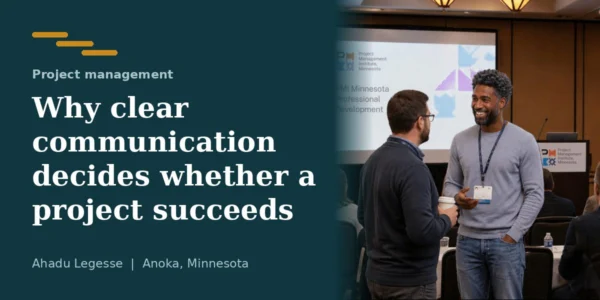
The PMI Minnesota Chapter is the local chapter of the Project Management Institute. It runs events, educational programs and networking opportunities for project professionals across the state. Ahadu follows its programs as part of his own professional development, and recommends chapter events to newer project managers as a low-pressure way to meet people who do the same work in different industries.
Certifications
Certifications are not a substitute for experience, but they give structure to learning and a shared vocabulary with colleagues. The Project Management Institute’s PMP is aimed at experienced project managers, while the CAPM suits people earlier in their careers. Agile and Scrum credentials are also common among Twin Cities employers that run software and systems projects.
Local colleges and universities
Ahadu’s own education is a good example of what the region offers: he earned an associate degree at Anoka-Ramsey Community College in Coon Rapids and a bachelor’s degree in business administration at Metropolitan State University in Saint Paul, which serves many working adults. Community colleges and universities across the metro offer business, management and project management coursework, often with evening and online options.
Learning inside large employers
Much professional development happens on the job. Large organizations often provide internal training, communities of practice and chances to join cross-functional projects. Ahadu’s advice is to volunteer for work that crosses departments: it is the fastest way to learn coordination, stakeholder communication and change management.
| Option | Best for | Time commitment |
|---|---|---|
| PMI Minnesota events | Networking and current practice | A few hours a month |
| PMP or CAPM certification | Structured knowledge and credibility | Several weeks to months of study |
| College coursework | Business and management foundations | A term or longer |
| Cross-functional projects at work | Practical coordination experience | Ongoing |
| Mentoring | Career direction and honest feedback | An hour or two a month |
Mentoring
For Ahadu, mentoring may be the most valuable option of all — and it is one he wants to give back. Many people move into project management from administrative or technical roles without a clear picture of the job. A mentor can explain what the day-to-day work involves, how to organize a first project, and how to handle difficult decisions. He provides guidance to project coordinators and junior team members today and hopes to do more through writing, discussions and The Steady Progress Podcast.
Keep it sustainable
Professional development works best as a steady habit rather than a burst of effort. Ahadu reads about management, leadership and personal finance, attends workshops and follows changes in workplace technology, while keeping time for golf, tennis and the outdoors in Anoka County. Small, consistent investments add up over a career.
Frequently asked questions
Is there a PMI chapter in Minnesota?
Yes. The PMI Minnesota Chapter serves project management professionals across the state, with events, educational programs and networking for members and non-members.
What certifications help project managers in the Twin Cities?
The Project Management Institute’s PMP is the most widely recognized credential for experienced project managers, and the CAPM is aimed at people earlier in their careers. Agile and Scrum certifications are also common in the region’s technology and healthcare employers.
How can a new project manager find a mentor in Minneapolis–St. Paul?
Ask experienced colleagues inside your organization, attend local professional association events, and reach out to practitioners who share their experience publicly. Ahadu Legesse welcomes questions from people entering the field.